Kenya is facing a deepening financial strain as unpaid government bills continue to mount, threatening development projects and the survival of small businesses.
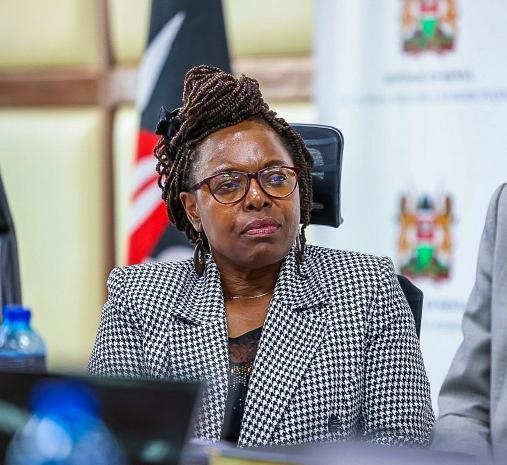
The Controller of Budget, Margaret Nyakang’o, reports that arrears now total Sh524.84 billion, nearly matching the national development budget for ministries, departments, and agencies (MDAs).
Nyakang’o warned that these outstanding bills are putting the government in a “sinking in debt, in pending bills” situation, with serious consequences for the economy. She said the total has risen from Sh516.27 billion last year, despite repeated instructions to settle payments promptly.
The report, which covers up to June 30, 2025, shows that the national development budget for MDAs stands at Sh612.98 billion, meaning unpaid bills are absorbing almost the entire allocation.
“How do you have pending bills of 524.84 against a budget of 612.98 billion?” Nyakang’o asked during the National Taxpayers Association survey release.
The Controller of Budget described the unpaid bills as a hidden debt that hampers the operations of small and medium-sized enterprises (SMEs) and other suppliers who depend on timely payments.
“This means that our hard-working Kenyans, who have invested in the provision of goods and services through the government, do not get their money to rejuvenate their businesses,” she said. “Ultimately, it reduces cases of business failure—but only if we pay. And there have been many.”
Many contractors rely on loans to deliver projects, and delayed payments force them to bear financial risks. Nyakang’o cited limited fiscal space as a key factor, noting that 72 per cent of domestic revenue is tied up in servicing debt, leaving ministries with insufficient funds to pay suppliers even after contracts are completed.
County governments face similar challenges. Data from the 2025 Budget Review and Outlook Paper shows that counties owed Sh176.9 billion in pending bills by June 30, 2025, with Nairobi responsible for nearly half.
For many contractors, delayed payments threaten their ability to meet payrolls and loan obligations.
“Let us at least pay for what we have consumed. This will circulate money in the economy and increase the taxes we can collect,” Nyakang’o said.
She further highlighted that illicit financial flows cost Kenya an estimated Sh253 billion annually, undermining revenue collection and worsening inequality. Despite KRA collecting Sh2.571 trillion in 2024/25, most funds go toward debt, leaving little for supplier payments.
Nyakang’o also raised concerns about tax compliance, revealing that only 7.5 per cent of registered PIN holders declare taxable income.
Tax advisor Rispar Simiyu supported her, saying a fair and transparent tax system builds trust, improves compliance, and ensures timely payments to contractors.
“Taxation should not be viewed as a burden but a shared responsibility,” Simiyu said. “Citizens must see tangible results of their contributions. When taxpayers understand how and why decisions are made, trust grows—and so does voluntary compliance.”
Simiyu added that the Treasury is investing in digital systems to reduce leaks and make revenue collection more transparent. She also stressed policies supporting MSMEs and informal sector participants who rely on government contracts.
“Around the world, we are witnessing a growing emphasis on transparent, accountable, citizen-responsive tax systems, systems that not only raise revenue but also build trust. For Kenya to realise its development aspirations and to reduce excessive dependence on external financing, we must anchor our tax framework on these principles,” she said.
Experts warn that unpaid bills discourage investment and strain the private sector.
“Advancing accountability and rebuilding trust in our fiscal system requires very strong constructive collaboration between the citizens, government institutions, civil society, and the private sector that plays a very pivotal role towards the nation building,” said NTA CEO Patrick Nyangweso.































Comments
Sign in with Google to comment, reply, and like comments.
Continue with Google